
Chopin study editions
Stop memorizing,
start understanding.
Play Chopin’s real melody from day one, over simple chords that show you how the piece works.
The melody from day one
Chopin’s right hand exactly as written. The hard left-hand work waits.
Every chord, understood
Named above the staff, numbered below. You see how the piece is built.
Remembered by structure
A progression and a form stay with you longer than a string of notes.
Start anywhere, improvise
Know which chord you are on, pick up at any bar, play around the patterns.
Popular pieces
All 178 Prelude in E minor$9Op. 28 No. 4
 Fantaisie-Impromptu in C♯ minor$9Op. 66
 Waltz in D♭ majorComingOp. 64 No. 1 · “Minute”
 Nocturne in D♭ majorComingOp. 27 No. 2
 Prelude in D♭ majorComingOp. 28 No. 15 · “Raindrop”
 Nocturne in E minorComingOp. 72 No. 1
 Nocturne in B majorFreeOp. 32 No. 1
All of Chopin, by category
All 178 piecesThe method
Understand it first, then play it as written.
Chopin suits this especially well. The right hand carries the singing line. The left hand mostly spreads the harmony out in wide patterns, and learning those first pulls your attention away from the melody. Gather each pattern back into its chord and you keep the harmony whole, with the hard part saved for later.
Phase 1 · this edition
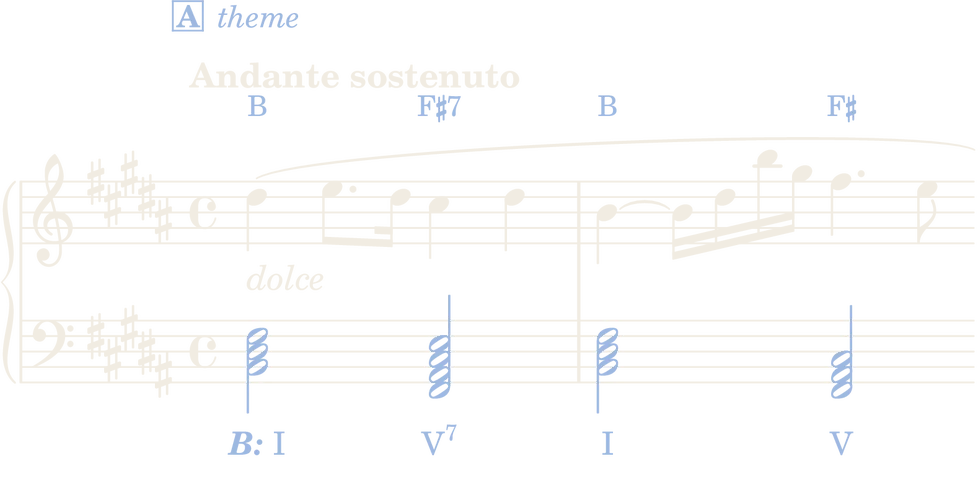
The melody over explicit harmony
Right hand as written. Left hand as one root-position chord per harmony, with chord names above and roman numerals below.
Phase 2 · Chopin’s score
His left hand, over chords you know
Layer in Chopin’s patterns one section at a time. The harmony underneath is already in your hands and your ear.

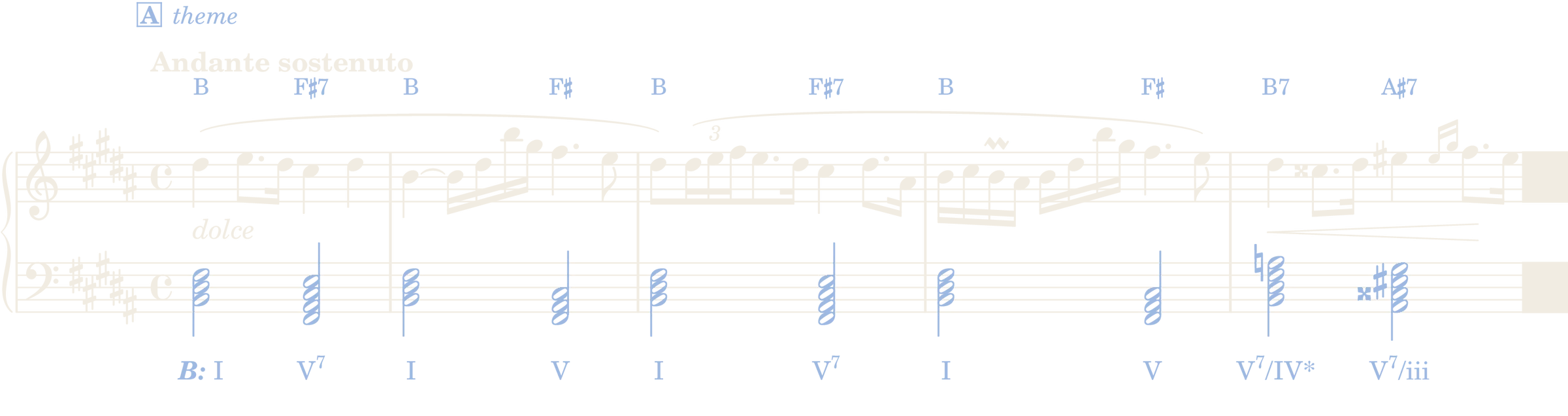
Nocturne in B major, Op. 32 No. 1 · bars 1–5
Every chord, named and under your hand
AboutRichard Fisher25 years at the piano
“I learn every new piece this way: the melody over its chords first, then the real left hand. It’s how I learned the Nocturnes.”
Engraving sources and licences are on the credits page.